Mount Kilimanjaro
Overview
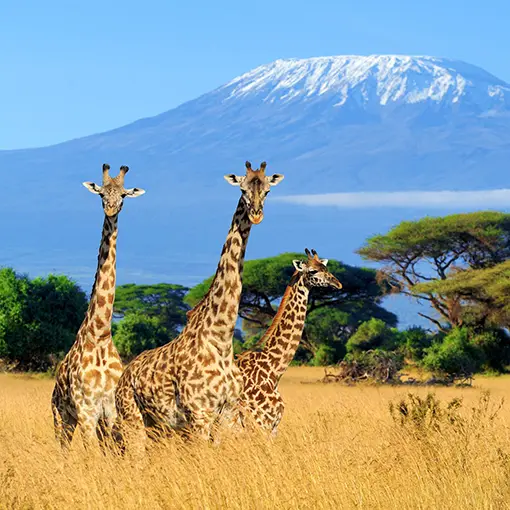
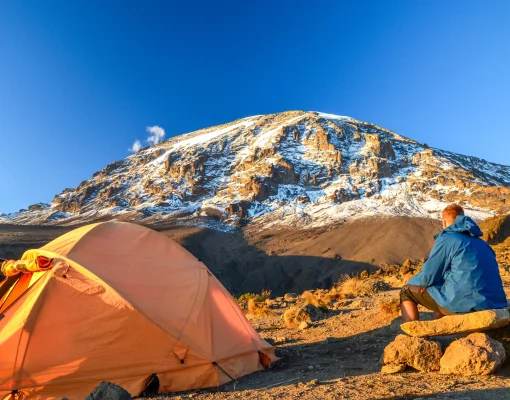
Mount Kilimanjaro, often referred to as the “Roof of Africa,” is the highest mountain on the African continent and one of the most iconic peaks in the world. It stands at 5,895 meters (19,341 feet) above sea level, making it the tallest free-standing mountain in the world. It’s a dormant stratovolcano with three cones: Kibo, Mawenzi, and Shira.
Kilimanjaro is located in Tanzania, East Africa, near the border with Kenya. It is part of Kilimanjaro National Park, a UNESCO World Heritage Site.
Fun Facts about Mt. Kilimanjaro
Glaciers and Snow
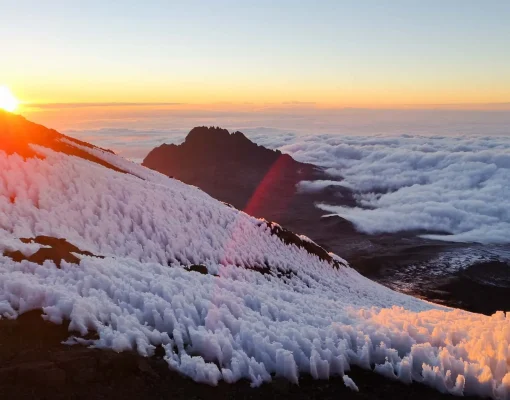
Despite its proximity to the equator, Mount Kilimanjaro is one of the few places in Africa where you can find glaciers and snow. However, due to climate change, these ice formations have been shrinking over the years. Scientists estimate that the glaciers may disappear completely within a few decades.
Diverse Ecosystems
Kilimanjaro's slopes feature a remarkable range of ecosystems, from lush rainforests at lower altitudes to alpine deserts near the summit. As you ascend the mountain, you'll pass through several distinct climate zones, each with its unique flora and fauna.
Kilimanjaro's Name
The name "Kilimanjaro" is of uncertain origin and has various meanings in different local languages. However, one theory suggests that it might be derived from the Swahili words "kilima," which means "mountain," and "njaro," which is a Kichagga word for "whiteness." This interpretation refers to the mountain's snowy peaks.
Top Experiences in Mt. Kilimanjaro
Trekking Through Varied Landscapes
Sunrise at Stella Point and Uhuru Peak
Wildlife Encounters
Summiting Uhuru Peak
Descending Through Mweka Route
Mt. Kilimanjaro Tours
Most Popular Categories
Tour Duration
- 5
- 6
Mt. Kilimanjaro Routes
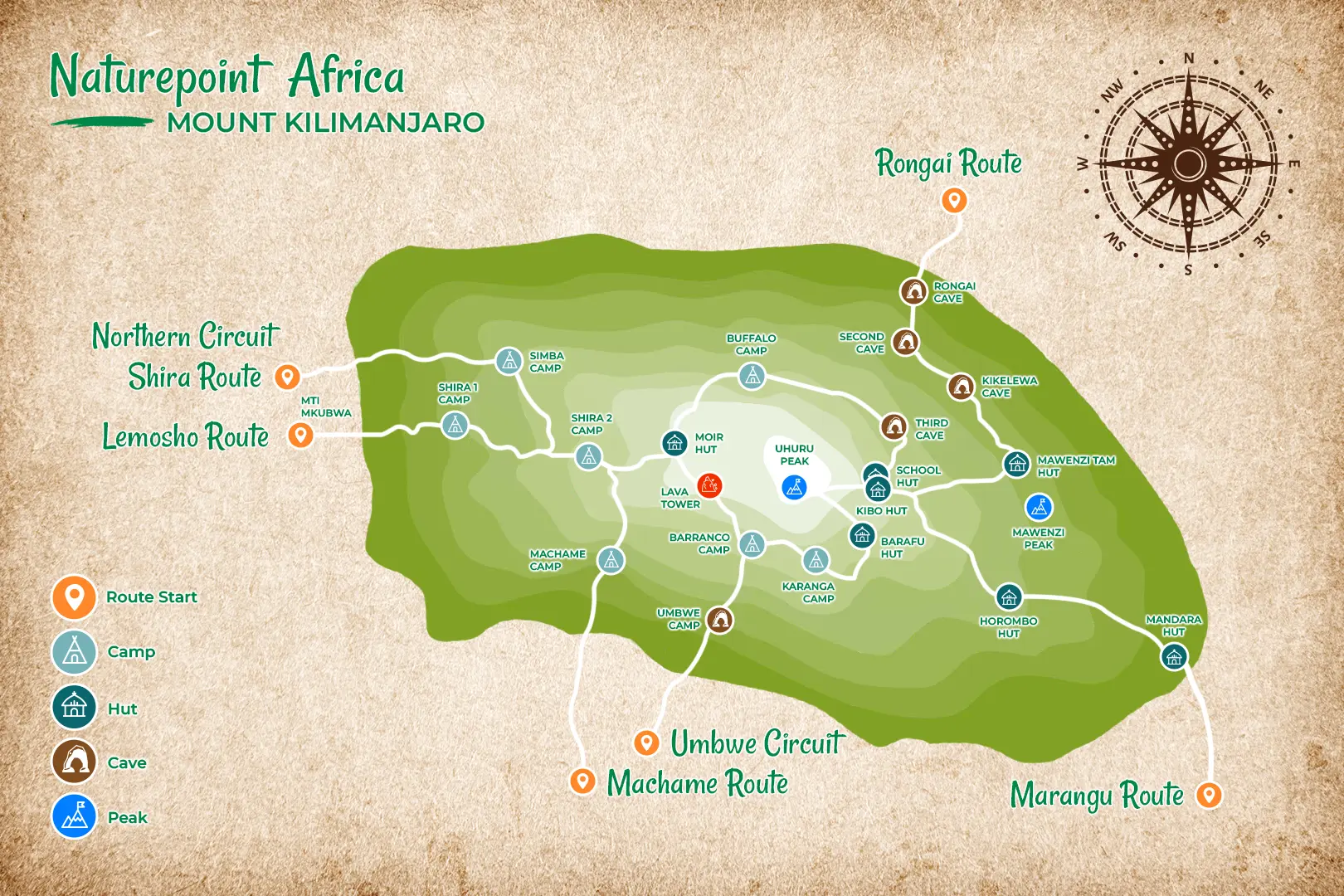
Mount Kilimanjaro offers several trekking routes, each with its own unique characteristics, distances, and levels of difficulty. Here’s an overview of the most popular routes, along with their fitness level requirements, approximate distances, and difficulty ratings.
Marangu Route (Coca-Cola Route)
Fitness Level: Moderate
Distance: Approximately 72 kilometers (45 miles) round trip
Difficulty: Moderate
Description: The Marangu Route is known for its huts with bunk beds, making it the most comfortable option. It’s often considered less challenging, but the shorter duration can result in lower acclimatization, so success rates may vary.
Machame Route (Whiskey Route)
Fitness Level: Moderate to High
Distance: Approximately 62 kilometers (38.5 miles) round trip
Difficulty: Moderate to High
Description: The Machame Route is one of the most scenic routes, with diverse landscapes. It’s challenging but offers better acclimatization due to the longer duration.
Lemosho Route
Distance: Approximately 70 kilometers (43.5 miles) round trip
Difficulty: High
Description: The Lemosho Route is known for its breathtaking scenery and less crowded trails. It’s considered one of the most beautiful routes but requires a good fitness level due to its length and elevation changes.
Rongai Route
Distance: Approximately 73 kilometers (45.5 miles) round trip
Difficulty: Moderate
Description: The Rongai Route approaches Kilimanjaro from the north and is considered one of the easier routes. It offers a more remote and less crowded experience.
Northern Circuit Route
Distance: Approximately 98 kilometers (61 miles) round trip
Difficulty: High
Description: The Northern Circuit Route is the longest and offers the best acclimatization due to its extended duration. It provides stunning panoramic views and is less crowded.
Umbwe Route
Distance: Approximately 56 kilometers (35 miles) round trip
Difficulty: Very High
Description: The Umbwe Route is the most challenging route, known for its steep ascents and demanding terrain. It’s recommended for experienced trekkers with excellent fitness.
Shira Route
Distance: Approximately 71 kilometers (44 miles) round trip
Difficulty: High
Description: The Shira Route begins at a higher elevation, which can pose acclimatization challenges. It’s often recommended for those who have previously acclimatized at a similar altitude.
Best time to go
Dry Season
(June to October)
This is the most popular time to climb Kilimanjaro due to the favorable weather conditions. Clear skies and minimal rainfall provide excellent visibility and comfortable trekking temperatures. Cooler temperatures at higher elevations, especially at night, reduce the risk of overheating while hiking. This season tends to be less humid and offers a more pleasant trekking experience.
Short Wet Season
(November to mid-December):
This is a transitional period, transitioning from the dry season to the long rainy season. While there may be occasional rain showers, it's still a relatively good time to climb, with fewer crowds on the mountain compared to the dry season. The landscapes are lush and green, making for beautiful scenery.
Preparation and Things to Remember
- Domestic Flight: If you arrive at Kilimanjaro International Airport (JRO), it’s a short drive to both Moshi and Arusha. You can also take a domestic flight from Dar es Salaam to Kilimanjaro International Airport.
- Shuttle or Taxi: You can hire a shuttle or take a taxi from Julius Nyerere International Airport (DAR) in Dar es Salaam to Moshi or Arusha. The journey can take several hours, so plan accordingly.